
In this field note
A bottle collator can prepare a group without completing a shipping case. Treat Sidel’s RoboSELEX as an infeed task to evaluate alongside the receiving case packer, with actual bottles and a defined handoff condition.
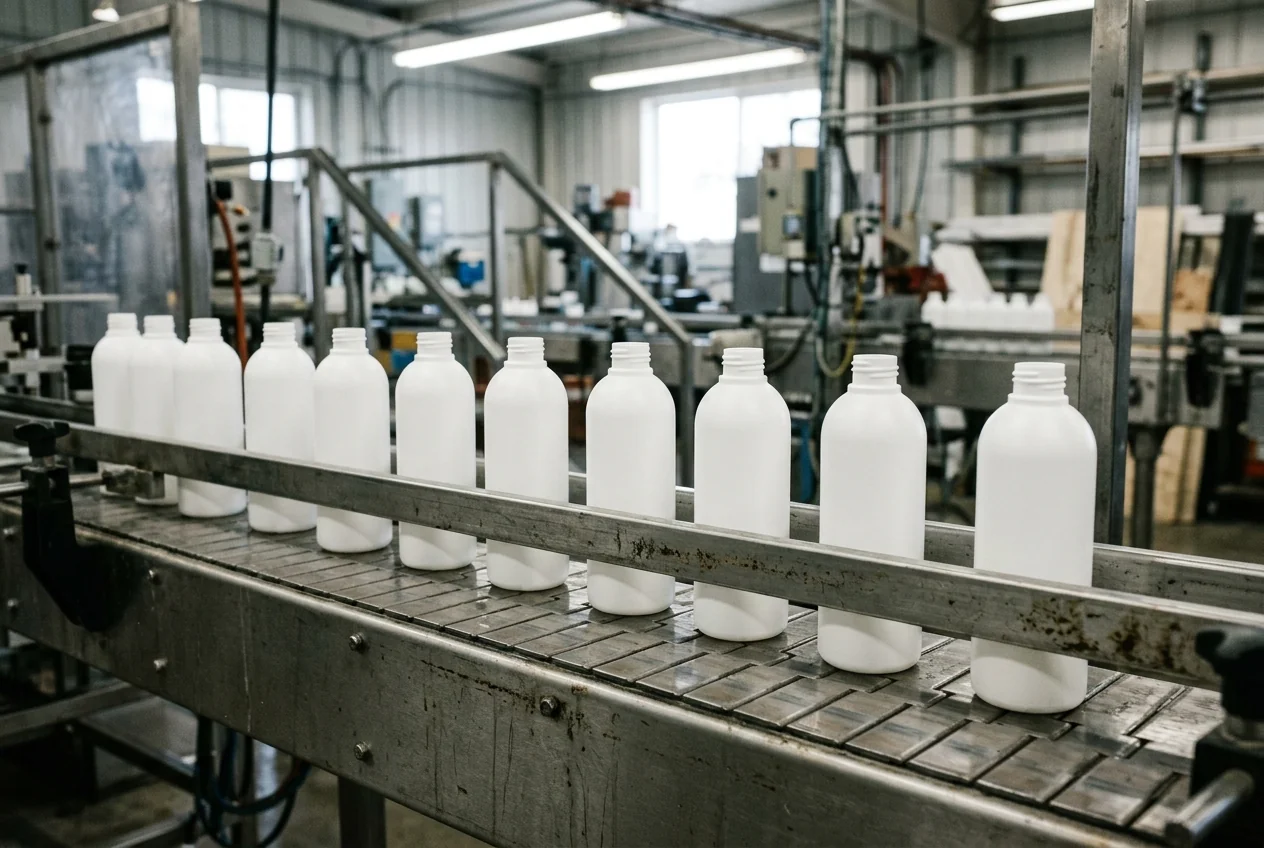
Sidel describes RoboSELEX as an accumulation-free collating infeed system for case packers. The practical trial should establish how bottles arrive, how the required group reaches the packer and what happens during disturbances and a format change. This article reviews the public material and proposes a trial matrix; it does not establish retrofit compatibility or independently verified output.
Locate the boundary before asking about capacity
The source’s distinction matters: collation creates an arrangement of products; loading places that arrangement into the case. Your case packer may perform other steps, and a project can combine functions, but a collator’s nominal rate does not describe accepted closed cases.
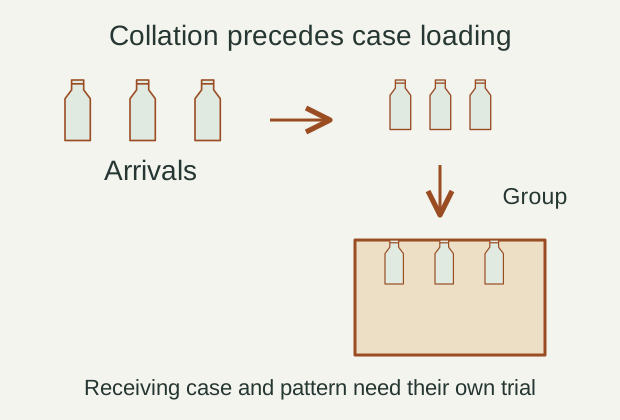
Sidel’s product page describes a concept with two Delta robots and a continuous movement system without accumulation. It states a range of 80–320 bottles per minute and group counts from 3 by 1 to 8 by 6, depending on product size. These are published supplier claims. They do not mean every bottle and pattern can achieve the top rate, or that your existing packer can receive it.
| Public description | Question for the proposed application |
|---|---|
| Lightweight, shaped bottle handling | Which actual bottle and fill state will be demonstrated? |
| Product spacing through upstream conveyor speed variation | What arrival variation can the supplied arrangement handle? |
| Accumulation-free collation | What happens when the receiving case packer stops? |
| Feeding into case packers | What receiving geometry and controls must this packer provide? |
Trial product arrival as well as the ideal stream
Describe the stream the upstream process can actually supply. Bottle base, shoulder and fill state belong in the sample specification. Where variations matter, include them in an agreed test condition rather than assuming that the nominal sample represents every lot.
A demonstration at a steady ideal feed does not answer how the system restarts after a gap. Ask the supplier to define permitted trial disturbances and record its response. The test must follow the supplier’s safe procedure; this table is an acceptance-planning aid.
| Condition to agree | Observe at the infeed | Observe at the receiving packer |
|---|---|---|
| Representative steady arrival | Stability and spacing | Group presentation and completed loading |
| Product gap and replenishment | Recovery behaviour | Incomplete-group handling |
| Receiving packer pause | Upstream response | Restart sequence and retained groups |
| Agreed difficult bottle sample | Contact, orientation and damage | Fit within the required case pattern |
| Format transition | Guide/tool/settings changes | First accepted loaded case |
Judge the group inside the real case
Use the case, pattern and product protection specified for shipment. A group that looks orderly on the conveyor can still be wrong for the receiving package. Record bottle orientation, interference and any damage criterion at the actual handoff and after loading.
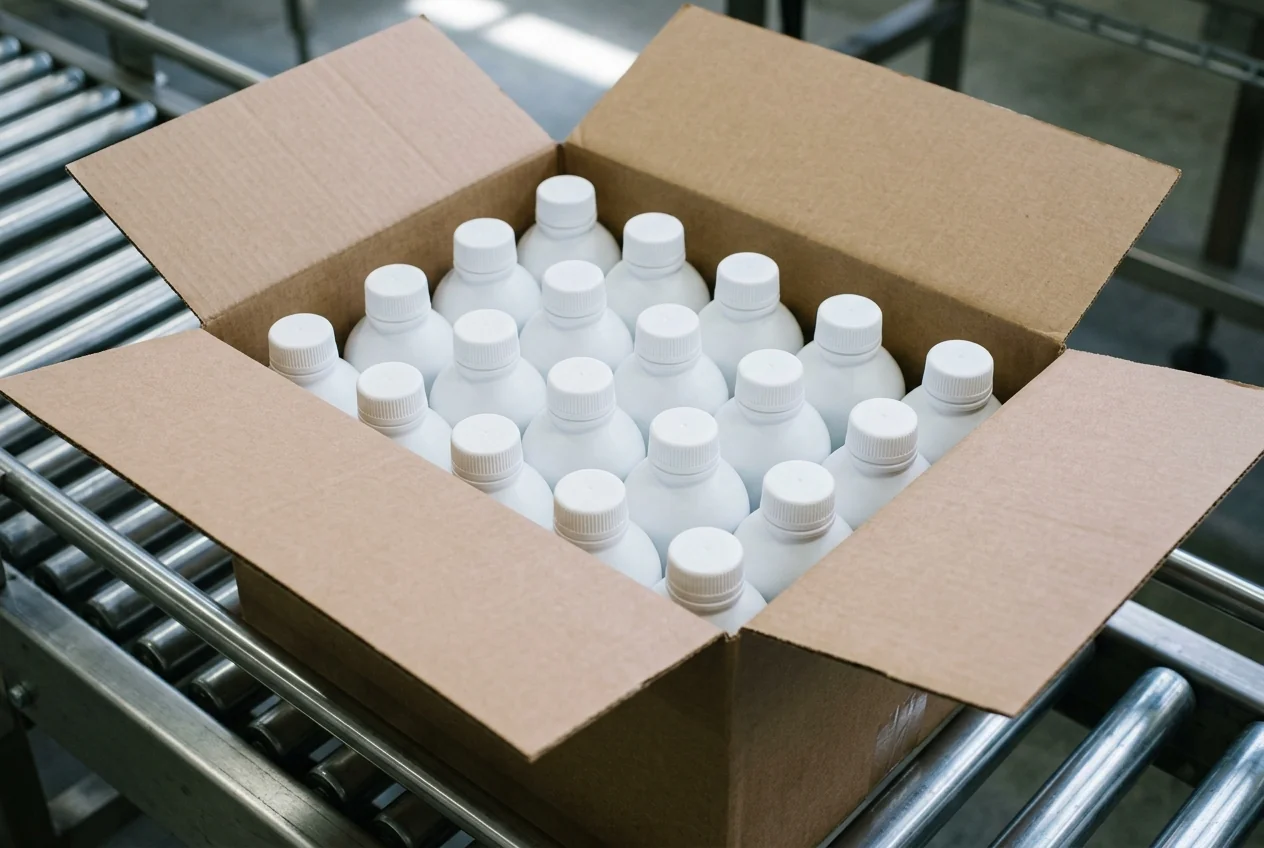
Sidel discusses the possibility of eliminating pucks for conveyable, non-accumulable shaped bottles. That conditional statement needs an application-specific check. Do not remove required supports from the project scope because a general product page describes the possibility.
The packaging-layer comparison helps document which equipment creates the group, which forms the case and which loads it. Preserve that division in a cost proposal as well as in the trial.
Keep changeover acceptance attached to the format pair
The product page and 2026 PDF state one minute for a same-bottle collation change and two minutes thirty seconds for a different bottle; the 10 March release uses two minutes for a different-bottle format. Ask which definition and included work apply to the proposed transition. Do not resolve the discrepancy by choosing the faster figure.
For this case-packing task, the acceptance endpoint should address the receiving operation, not only a changed recipe. Record the next group and the next loaded case under the agreed trial boundary. Keep old and new case pattern references with the result.
Read the event as a historical case
Sidel’s 10 March 2026 release announced an intended Interpack premiere in May. Packaging Europe reported the system on 11 September 2026. The later report is supplier-based coverage, not a new independent acceptance trial.
The public material examined does not settle a retrofit’s controls scope, installation cost, US availability, local support or actual customer OEE. Put those items into the project’s unresolved-actions list. The case-packer cost record keeps interface work visible while proposals are reconciled.
Methods and sources
This case analysis compares Sidel’s product page, English 2026 product PDF and 10 March release with full-text local archive material and Packaging Europe’s 11 September report. Live sources were retrieved on 16 October 2026. Trial conditions are editorial proposals, and generic bottle images do not depict the named system. Read the industry report for later coverage. Return to case packers to plan the loading scope.
Primary documents compared (retrieved 16 October 2026):
- Sidel RoboSELEX product page, Features and Equipment operability; one-minute same-bottle collation change and two minutes thirty seconds for a different bottle.
- Sidel announcement, 10 March 2026, “Driving higher productivity”; one-minute collation and two-minute different-bottle wording.
- English RoboSELEX product PDF, 2026, page 1 performance claims and page 2 equipment scope; two minutes thirty seconds for a different bottle.