
In this field note
A small case can fit a sealer’s headline size range and still be poorly supported at the entry. Verify the actual loaded case against the machine drawing, belt-contact arrangement and closure path, then judge the finished seal with agreed acceptance checks.
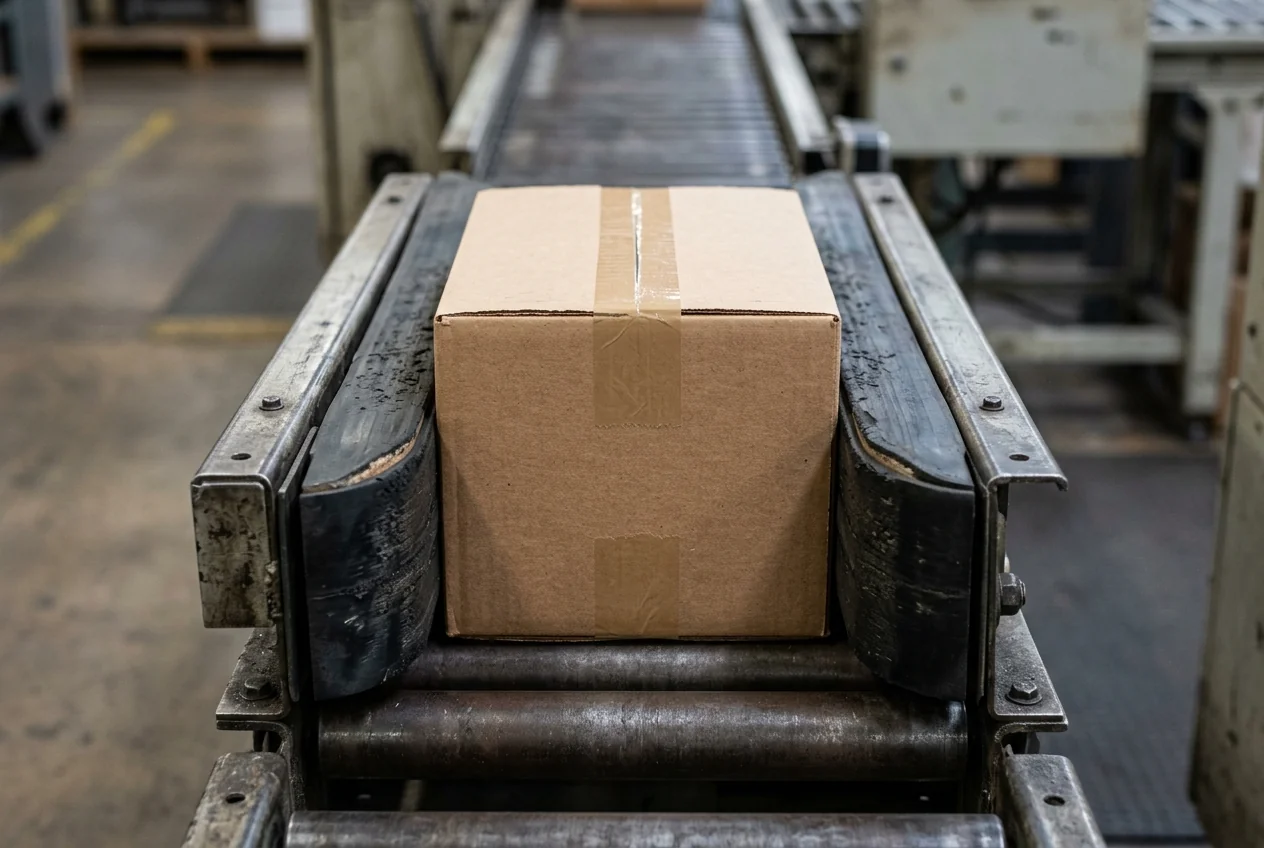
Choose a small-box sealer by a demonstrated case-and-machine combination. Ask for the permissible dimensional combinations, minimum contact requirements and receiving condition for the exact model. Tape and hot-melt closure need different consumables and checks. This guide supplies a trial record, not a universal minimum box size or a set of machine adjustments.
Measure the box the machine will receive
Use the loaded case and the actual transport orientation. Document which dimension the supplier calls length, width and height. Then identify the relevant drawing revision and any restrictions on combinations of dimensions.
| Input or item | Value or source | Why it matters |
|---|---|---|
| Case dimensions | Approved drawing plus loaded sample | Defines the real incoming geometry |
| Weight and contents | Product/case specification | Affects the supported handling task |
| Top-flap condition | Actual upstream operation | Defines manual or automatic flap work |
| Closure requirement | Tape or hot-melt specification | Defines the sealing process |
| Model limits | Current supplier drawing and manual | Identifies the permissible application boundary |
Do not assume the smallest length, smallest width and smallest height in a brochure can be used together. Ask the supplier to confirm the exact combination and any tooling or transport option it requires.
Inspect support and contact before closure
A short box may meet a gap or handoff differently from a longer one. Identify where its base is supported and where the driving belts contact its sides. Observe the case through entry, closure and discharge under the approved trial procedure.
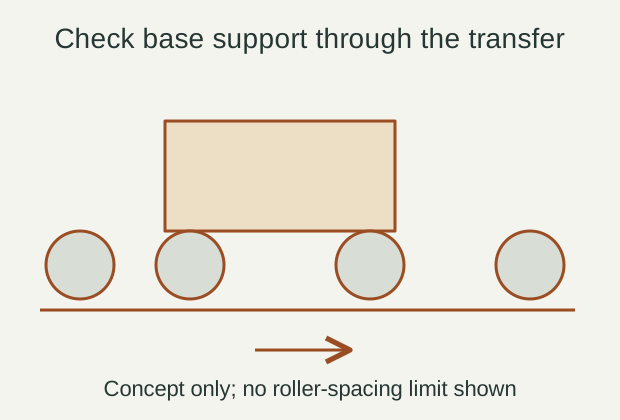
Record tipping, skew or deformation where it first occurs. Do not attribute a crooked tape line to the tape head before checking case presentation. Wexxar’s forming guide identifies board and score variation as relevant upstream inputs; the sealer receives the consequences of that variation too.
Evaluate tape and glue as separate processes
Wexxar’s catalog describes both tape and hot-melt case-sealing options. Their acceptance records should reflect the selected process rather than using a generic “sealed” tick.

| Closure route | Inspect | Obtain from the responsible supplier |
|---|---|---|
| Tape | Seam position, applied path, end coverage and adhesion under the specified check | Tape specification, head compatibility and accepted application method |
| Hot melt | Specified application location, compression and bond result | Adhesive specification, process conditions and bond acceptance method |
| Either route | Flap position, case damage and discharge condition | Case specification and model-specific limits |
The image shows a tape path over the top seam and an end. It does not establish an accepted tape length, adhesion result or package transit performance. Those requirements must come from the actual case and closure specification.
Trial the awkward combinations
Include the lightest or least stable relevant loaded case, not only the most convenient sample. Select the actual material lots and conditions that represent production. If cases arrive in mixed sizes, confirm whether the proposed machine changes automatically, requires manual setup or needs a different production arrangement.
| Trial case | Receiving condition | Support / tracking result | Closure result | Accepted / hold |
|---|---|---|---|---|
| Main production case | ___ | ___ | ___ | ___ |
| Smallest required combination | ___ | ___ | ___ | ___ |
| Relevant light or unstable load | ___ | ___ | ___ | ___ |
| Next size or mixed-size transition | ___ | ___ | ___ | ___ |
Retain a rejected case with its observation number. Record whether the defect began at feeding, flap handling, application or discharge. That location gives the supplier a concrete problem to resolve.
Close the evidence gaps before selection
A successful dry run on an empty rigid box does not settle the loaded application. An acceptable seal immediately after the machine also does not establish the complete shipping package’s performance. Keep those separate acceptance questions in the project record.
If incoming cases are already out of square, work back to the blank and forming step. The case-erector guide provides a sample matrix for that investigation. Use it to distinguish an upstream case-quality issue from a sealer configuration issue.
Methods and sources
This proposed application checklist uses Wexxar’s catalog for the tape/hot-melt distinction and its Case & Tray Forming 101 guide for incoming-board variation. The support diagram is conceptual and carries no dimensions or model claim. No universal minimum size, belt setting, adhesive setting or seal-strength threshold is supplied. Source files were retrieved on 16 October 2026. The case sealers guide provides the broader receiving-and-closure context.
Source documents read:
- Flex E Pack catalog (retrieved 16 October 2026).
- Case & Tray Forming 101 (retrieved 16 October 2026).